Detection Speed Benchmarks by Industry: 7 Critical Risk Gaps
Detection Speed Benchmarks by Industry reveal serious risk gaps across sectors in 2026.
As ransomware campaigns accelerate and regulatory reporting deadlines tighten, detection speed has become a decisive cybersecurity metric. Organizations that detect malicious activity quickly reduce operational disruption, financial losses, and compliance exposure.
This analysis explores detection speed performance across major industries and explains why the gaps matter more than ever.
Table of Contents
What Is Detection Speed?
Detection speed measures how quickly security teams identify malicious activity after it begins.
It is typically tracked as:
- Mean Time to Detect (MTTD)
- Alert validation time
- Threat discovery duration
Detection speed focuses on identifying the threat, not containing or recovering from it.
👉 Related internal guide: Mean Time to Detect (MTTD)
Lower detection time creates more room for effective containment and regulatory coordination.
Why Detection Speed Is a Critical Risk Factor
Modern ransomware attacks escalate quickly.
According to CISA ransomware guidance:
Threat actors can:
- Escalate privileges within hours
- Disable backups early
- Exfiltrate sensitive data before encryption
Delayed detection increases:
- Financial damage
- Data exposure
- Compliance pressure
Under regulatory frameworks such as:
- CIRCIA (72-hour reporting)
- SEC cybersecurity disclosure rule
- UK 72-hour breach reporting
detection speed directly affects legal readiness.
Detection Speed Benchmarks by Industry now influence both security operations and executive governance decisions.
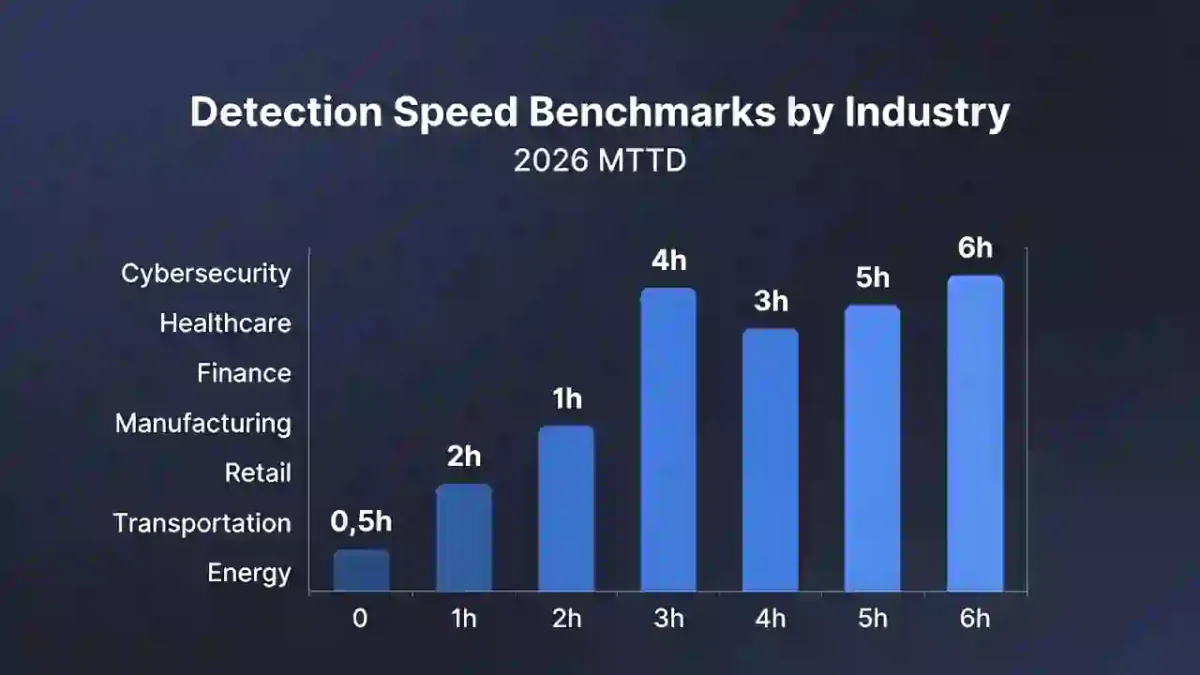
Detection Speed Benchmarks by Industry (2026 Data)
Estimated detection speed averages show clear performance differences:
| Industry | Average Detection Speed (MTTD) |
|---|---|
| Financial Services | 6–12 hours |
| Technology | 8–16 hours |
| Energy & Utilities | 12–24 hours |
| Healthcare | 24–72 hours |
| Government | 24–96 hours |
Detection Speed Benchmarks by Industry demonstrate that heavily regulated and well-funded sectors outperform others.
Healthcare Detection Challenges
Healthcare organizations often experience slower detection due to:
- Legacy medical infrastructure
- Fragmented networks
- Limited cybersecurity staffing
- Operational sensitivity
According to the Verizon Data Breach Investigations Report:
Credential misuse and delayed detection remain common factors.
Longer detection windows increase ransomware containment time and regulatory risk.
Financial Services Leadership
Financial institutions consistently lead Detection Speed Benchmarks by Industry.
Detection often occurs within 6–12 hours.
Key contributing factors:
- 24/7 Security Operations Centers
- AI-driven monitoring
- Automated alert triage
- Strong compliance oversight
Financial firms treat detection speed as a board-level KPI because reporting deadlines depend on rapid classification.
Government Sector Delays
Government agencies often face:
- Budget limitations
- Complex coordination processes
- Legacy infrastructure
Detection speed ranges from 24–96 hours.
Improving centralized visibility and automation remains a major focus in 2026.
Critical Infrastructure Trends
Energy and utilities operate hybrid IT and operational technology networks.
Detection speed averages 12–24 hours.
Industrial control systems introduce monitoring challenges that slow detection.
However, anomaly detection improvements are gradually reducing risk gaps.
How to Close Detection Gaps
Organizations can reduce detection risk by:
1️⃣ Deploying AI-based anomaly detection
2️⃣ Maintaining 24/7 monitoring coverage
3️⃣ Automating alert validation
4️⃣ Conducting proactive threat hunting
5️⃣ Measuring MTTD monthly and reporting to executives
Detection Speed Benchmarks by Industry will likely narrow as automation becomes standard.
Future Outlook
Attackers are reducing dwell time through automation.
As offensive speed increases, detection speed must improve accordingly.
Leading organizations now target:
- Under 12-hour average detection
- Near real-time alerting
- Automated incident triage
Detection speed is no longer optional.
It is a resilience requirement.
Final Thoughts
Detection Speed Benchmarks by Industry highlight serious risk gaps in 2026.
Financial services lead in rapid detection.
Healthcare and government continue to face structural challenges.
Reducing detection speed strengthens:
- Regulatory compliance readiness
- Incident containment efficiency
- Financial protection
- Operational resilience
In today’s threat landscape, the faster you detect, the stronger you defend.