Healthcare Breach Detection Timelines: 7 Critical Gaps
Healthcare Breach Detection Timelines remain one of the most concerning cybersecurity metrics in 2026.
Healthcare organizations handle sensitive patient data, operate complex legacy systems, and rely on interconnected medical devices. These factors create an environment where detection delays can significantly increase breach impact.
Understanding healthcare breach detection timelines helps security leaders reduce dwell time, improve compliance readiness, and limit operational disruption.
This article examines seven critical risk gaps affecting detection speed in the healthcare sector.
Table of Contents
Why Healthcare Is a Prime Target
Healthcare remains one of the most targeted industries for ransomware and data theft.
According to the Verizon Data Breach Investigations Report
Credential misuse and ransomware are dominant attack vectors.
Healthcare systems are attractive because:
- Patient data has high black-market value
- Legacy infrastructure is common
- 24/7 operations limit downtime tolerance
- Many devices lack modern security controls
Detection delays increase both financial and patient safety risks.
What are Healthcare Breach Detection Timelines?
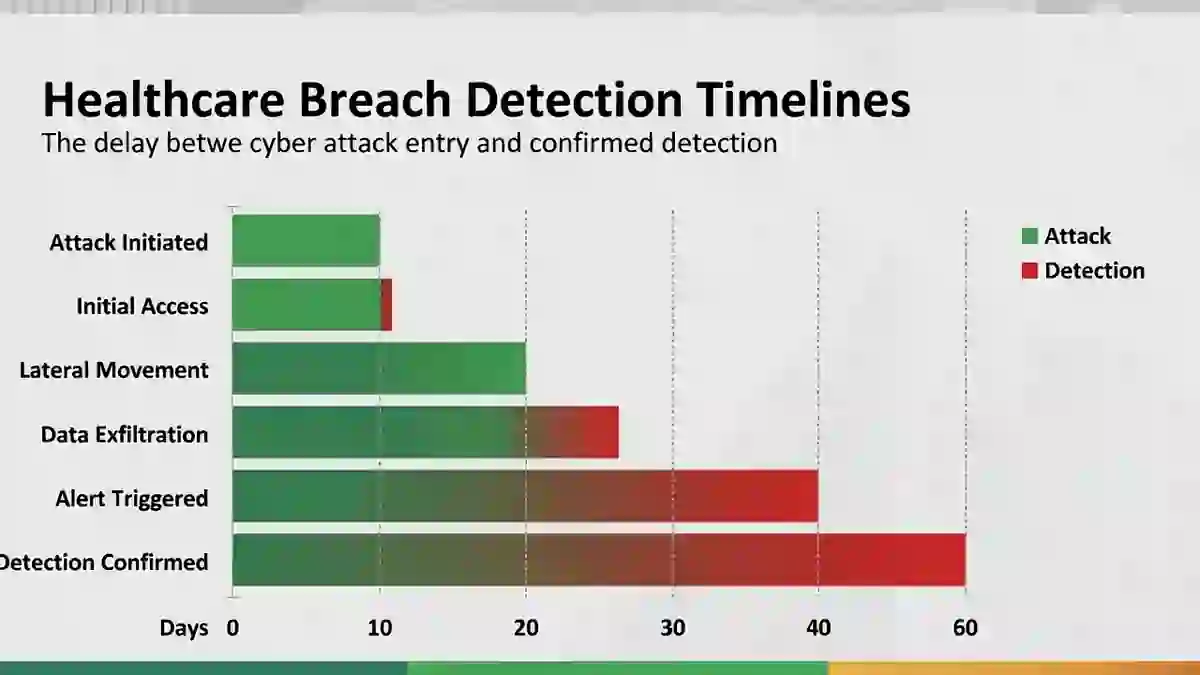
Healthcare Breach Detection Timelines measure how long it takes to detect malicious activity after an attacker gains access.
This is commonly tracked through:
- Mean Time to Detect (MTTD)
- Alert validation duration
- Investigation time
- Time to confirmed breach
👉 Related internal guide: Mean Time to Detect (MTTD)
Shorter detection timelines allow faster containment and regulatory response.
7 Risk Gaps in Healthcare Detection
1️⃣ Legacy Infrastructure
Many hospitals operate outdated systems that lack advanced monitoring capabilities.
2️⃣ Limited Security Staffing
Healthcare SOC teams are often under-resourced compared to financial institutions.
3️⃣ Alert Fatigue
High volumes of alerts slow investigation time.
4️⃣ Medical Device Exposure
Connected medical devices increase attack surface complexity.
5️⃣ Third-Party Vendor Risk
Vendors may introduce undetected vulnerabilities.
6️⃣ Delayed Incident Classification
Detection may occur, but confirmation can take days.
7️⃣ Slow Escalation Processes
Internal communication delays extend effective dwell time.
Healthcare Breach Detection Timelines often reflect systemic operational challenges.
Dwell Time in Healthcare
Dwell time measures how long attackers remain inside a system before discovery.
👉 Related comparison: Dwell Time vs MTTD
Healthcare dwell time can extend due to:
- Complex network architecture
- Device communication blind spots
- Limited behavioral monitoring
Long dwell time increases:
- Data exfiltration risk
- Ransomware spread
- Operational disruption
Regulatory & HIPAA Impact
Healthcare organizations must comply with HIPAA breach notification rules.
Delays in detection compress reporting timelines.
According to HHS guidance
Covered entities must notify affected individuals and regulators within specific timeframes.
If Healthcare Breach Detection Timelines are extended, compliance pressure increases significantly.
Speed reduces legal exposure.
How to Improve Healthcare Detection Timelines
Healthcare organizations can improve detection speed by:
1️⃣ Deploying AI-based anomaly detection
2️⃣ Implementing 24/7 monitoring
3️⃣ Segmenting medical device networks
4️⃣ Conducting regular phishing simulations
5️⃣ Integrating vendor access monitoring
6️⃣ Automating alert prioritization
7️⃣ Tracking detection metrics monthly
👉 Related: AI and Incident Response Automation
Automation reduces investigation delays and improves early warning signals.
Future Outlook
In 2026, healthcare security leaders are focusing on:
- Reducing Mean Time to Detect below 24 hours
- Implementing AI-driven SOC workflows
- Enhancing device visibility
- Strengthening vendor risk monitoring
Healthcare Breach Detection Timelines will continue improving as automation adoption grows.
However, legacy infrastructure remains a major challenge.
Final Thoughts
Healthcare Breach Detection Timelines directly influence ransomware containment, patient safety, and regulatory compliance.
Detection delays increase dwell time, data exposure, and operational disruption.
Reducing detection time is not just a technical goal — it is a patient safety priority.
In modern healthcare cybersecurity, speed equals resilience.