
How Long Do Hackers Stay Undetected? 7 Shocking Facts
How long do hackers stay undetected after breaching a network?
The answer is often longer than most organizations expect.
In 2026, attackers can remain hidden inside compromised systems for days or even weeks before detection. This hidden period is known as dwell time, and it directly impacts financial loss, data exposure, and recovery complexity.
Understanding how long do hackers stay undetected is critical for improving detection speed and reducing breach impact.
Table of Contents
What Does “How Long Do Hackers Stay Undetected” Mean?
The question how long do hackers stay undetected refers to the amount of time attackers remain inside a network before security teams discover them.
This period is called dwell time.
If attackers breach a system on March 1 and are detected on March 15, the dwell time is 14 days.
🔗 Link: Dwell Time in Cybersecurity
Reducing how long hackers stay undetected directly lowers overall damage.
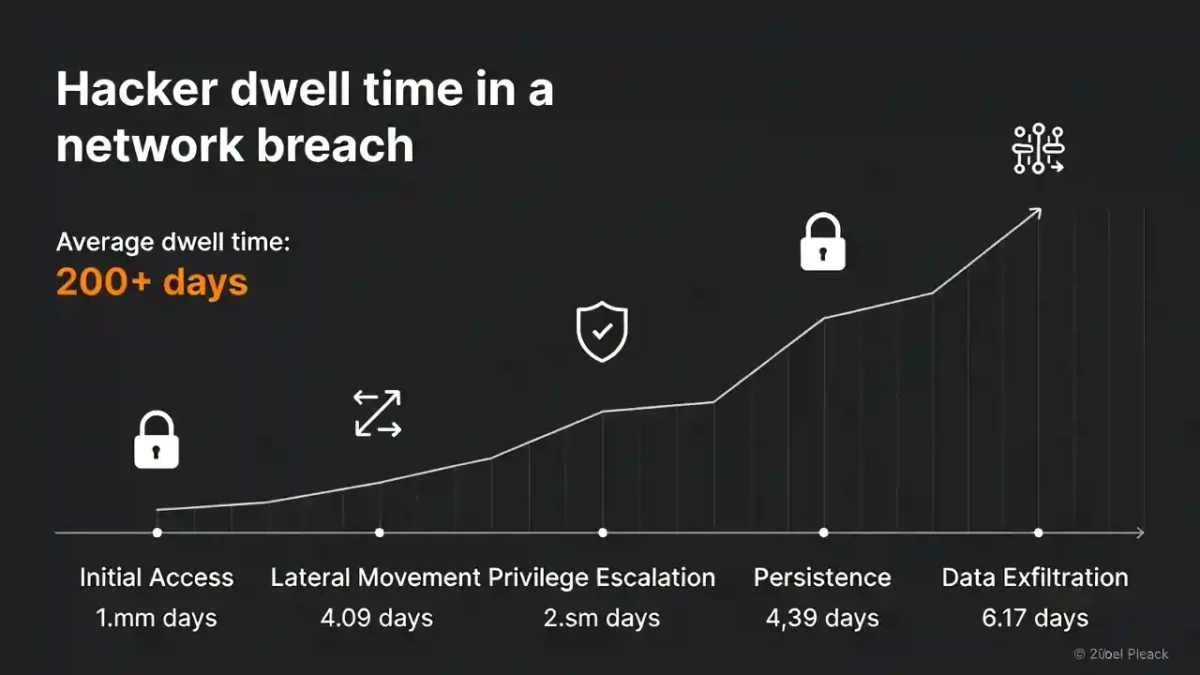
How Long Do Hackers Stay Undetected in 2026?
So, how long do hackers stay undetected today?
According to recent cybersecurity reports:
- Global median dwell time: 10–16 days
- Top-performing organizations: under 5 days
- Poorly monitored environments: 30+ days
These numbers vary depending on industry and security maturity.
🌍 External Link:
- Mandiant M-Trends Report
- IBM Cost of a Data Breach Report
- Verizon Data Breach Investigations Report (DBIR)
These global studies confirm that how long hackers stay undetected depends heavily on monitoring capabilities and automation maturity.
Real Breach Cases and Hacker Dwell Time
Understanding how long hackers stay undetected becomes clearer through real incidents.
Retail Sector Case
Attackers infiltrated payment systems and remained undetected for more than 40 days before data theft was discovered.
Healthcare Breach
Phishing compromise allowed attackers to stay hidden for nearly three weeks before abnormal access was flagged.
Manufacturing Ransomware Case
Threat actors maintained persistence for over 30 days before encryption was triggered.
In each case, the longer hackers stayed undetected, the greater the financial and reputational damage.
Why Long Undetected Access Is Dangerous
When hackers remain inside systems undetected, they can:
- Escalate privileges
- Move laterally across networks
- Identify sensitive databases
- Exfiltrate confidential information
- Disable security controls
Reducing how long hackers stay undetected directly improves:
🔗 Link: Mean Time to Detect (MTTD)
Faster detection reduces breach impact dramatically.
Industry Differences in Hacker Detection
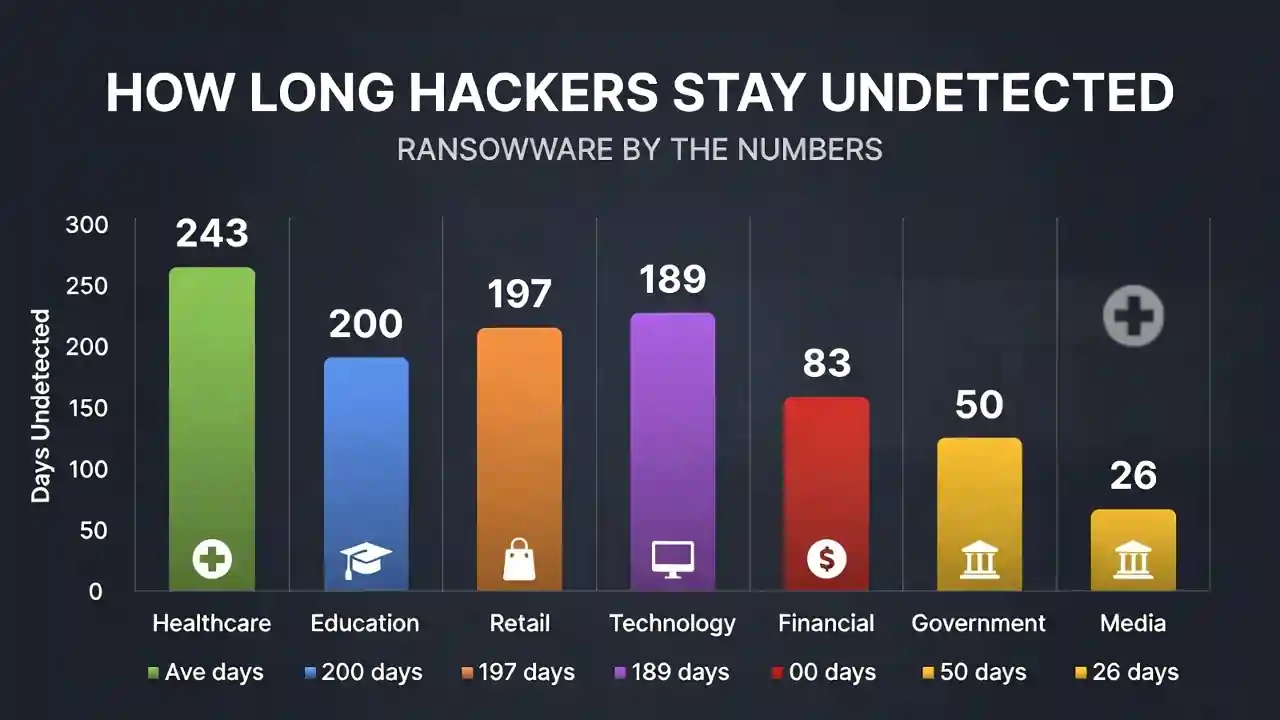
How long do hackers stay undetected varies across sectors.
| Industry | Average Dwell Time |
|---|---|
| Finance | 5–10 days |
| Healthcare | 15–25 days |
| Government | 10–20 days |
| Manufacturing | 20+ days |
Highly regulated industries detect threats faster due to strict compliance monitoring.
For broader comparison:
🔗 Link: Industry Benchmarks 2026
How to Reduce How Long Hackers Stay Undetected
Organizations can reduce how long hackers stay undetected by:
- Implementing continuous monitoring
- Deploying endpoint detection and response (EDR)
- Automating alert prioritization
- Conducting regular penetration testing
- Improving security awareness training
Mapping these improvements to the attack lifecycle strengthens visibility.
🔗 Link: Cyber Attack Lifecycle Timeline
Reducing how long hackers stay undetected is one of the most powerful ways to increase cybersecurity maturity.
Final Thoughts
So, how long do hackers stay undetected?
In many cases, longer than organizations expect.
In 2026, the average dwell time still ranges from 10 to 16 days globally. However, mature security programs are reducing that window to under five days.
Shortening how long hackers stay undetected is not just a technical goal—it is a strategic priority. Faster detection limits damage, reduces containment costs, and strengthens long-term resilience.
Organizations that continuously monitor and benchmark detection performance consistently stay ahead of attackers.