Cost of Slow Cybersecurity Response: 7 Critical Impacts
Cybersecurity incidents are rarely defined by whether they occur — they are defined by how quickly they are detected and contained.
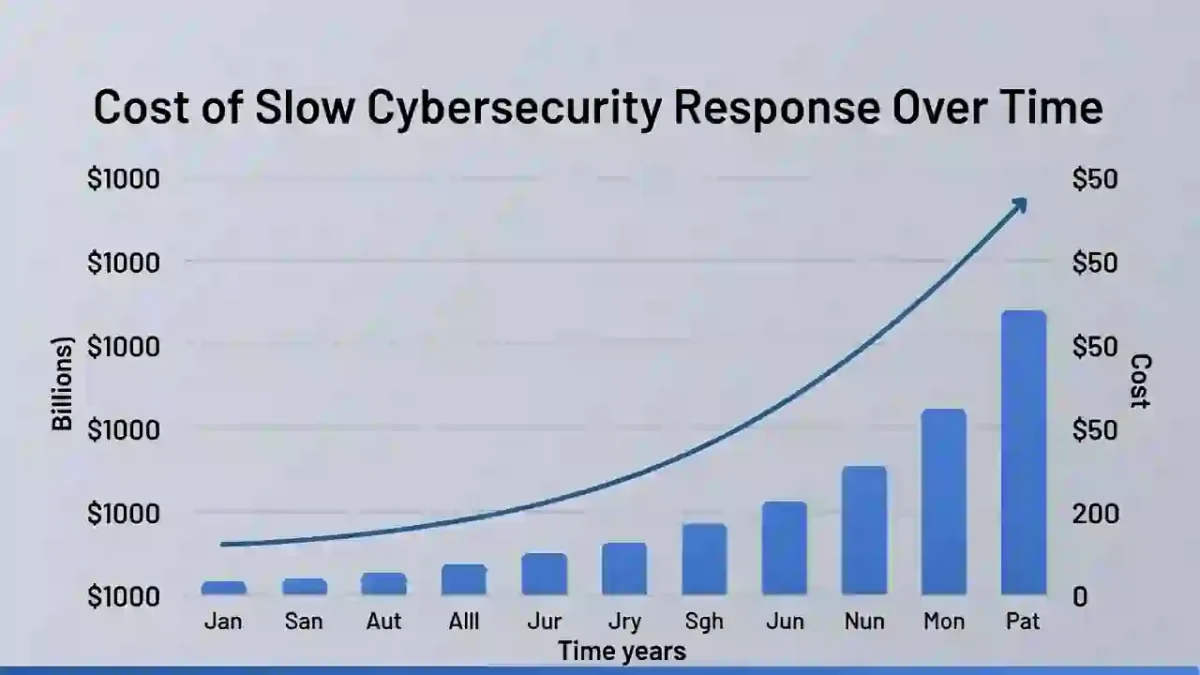
The Cost of Slow Cybersecurity Response increases dramatically as time passes. Delayed detection allows attackers to escalate privileges, expand access, and maximize disruption before containment begins.
In 2026, response speed is not just a technical metric — it is a financial control.
Table of Contents
Why Response Time Determines Financial Impact
Modern cyber attacks follow a structured progression:
- Initial compromise
- Persistence
- Privilege escalation
- Lateral movement
- Data exfiltration
- Operational disruption
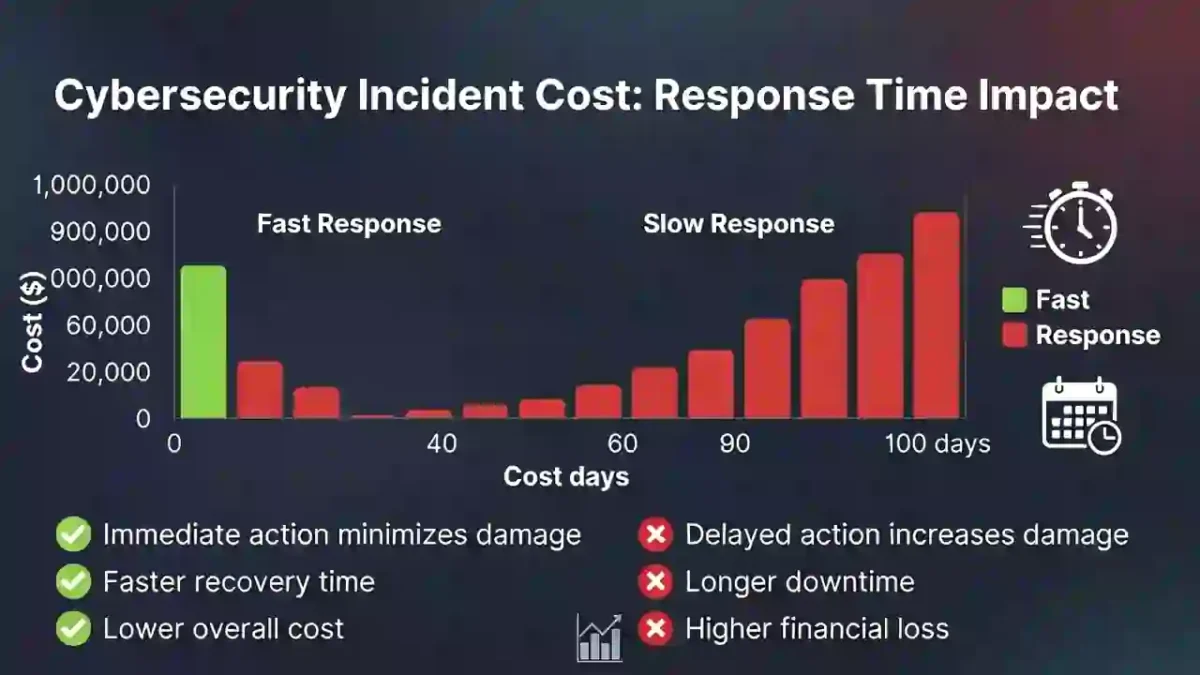
If a threat is identified early, containment limits scope. If detection is delayed, recovery complexity multiplies.
For a breakdown of how attacks unfold:
🔗 Internal Link: Cyber Attack Lifecycle Timeline
The Cost of Slow Cybersecurity Response grows with every stage attackers complete.
1️⃣ Higher Direct Breach Costs
Research consistently shows that extended detection timelines increase total breach expenses.
According to the IBM Cost of a Data Breach Report, Organizations that contain breaches quickly experience significantly lower overall costs compared to those with prolonged detection periods.
Slower response increases:
- Forensic investigation scope
- Incident response labor hours
- Third-party consulting expenses
- Infrastructure recovery costs
Time directly influences total remediation spend.
2️⃣ Extended Downtime and Revenue Loss
Operational downtime is often the most significant hidden cost.
When core systems remain unavailable:
- Business processes halt
- Revenue pipelines slow
- Customer transactions fail
For ransomware incidents, downtime frequently exceeds ransom payment itself.
🔗 Internal Link: Ransomware Attack Timeline
Delayed containment significantly amplifies downtime duration.
3️⃣ Expanded Data Exposure
The longer attackers remain active, the more data they can access.
Extended dwell time allows:
- Sensitive records to be copied
- Intellectual property to be stolen
- Backup systems to be compromised
Reducing dwell time is one of the most effective ways to control the Cost of Slow Cybersecurity Response.
🔗 Internal Link: How Long Do Hackers Stay Undetected
4️⃣ Regulatory and Compliance Penalties
Slow containment can increase regulatory scrutiny.
In industries such as healthcare, finance, and energy, delayed response may trigger:
- Higher fines
- Mandatory disclosures
- Compliance investigations
Longer exposure windows often correlate with larger regulatory penalties.
5️⃣ Escalating Legal Exposure
Legal risk expands as breach scope increases.
Organizations may face:
- Customer lawsuits
- Contractual penalties
- Class-action litigation
The Cost of Slow Cybersecurity Response often extends beyond IT remediation into prolonged legal proceedings.
6️⃣ Reputational Damage and Customer Churn
Customers evaluate not only whether a breach occurred — but how it was handled.
Delayed response can damage:
- Brand credibility
- Customer trust
- Investor confidence
Reputational recovery often requires significant communication and marketing investment.
7️⃣ Compounding Effect on Detection Metrics
Detection and containment metrics directly influence cost.
Improving:
🔗 Internal Link: Mean Time to Detect (MTTD)
And reducing containment delays lowers financial exposure.
Organizations that benchmark response performance against industry standards are better positioned to limit damage.
🔗 Internal Link: Industry Benchmarks 2026
How to Reduce the Cost of Slow Cybersecurity Response
To minimize financial impact, organizations should:
- Implement continuous monitoring
- Automate alert prioritization
- Conduct regular incident response exercises
- Strengthen endpoint detection
- Benchmark detection and containment time
Speed reduces scope. Reduced scope reduces cost.
Final Assessment
The Cost of Slow Cybersecurity Response is measurable and preventable.
Delays increase investigation complexity, regulatory exposure, downtime, and reputational damage. Faster detection and containment limit breach expansion and protect business continuity.
In cybersecurity, time compounds risk. Organizations that invest in response speed invest in resilience.