
Dwell Time vs MTTD: 7 Critical Differences Explained
Dwell Time vs MTTD is one of the most misunderstood comparisons in cybersecurity metrics.
Security leaders often focus heavily on Mean Time to Detect (MTTD). However, dwell time may reveal a deeper and more strategic risk indicator.
In 2026, understanding the difference between dwell time and MTTD directly impacts:
- Ransomware containment
- Regulatory reporting deadlines
- Financial damage
- Incident response efficiency
This guide explains the seven critical differences between these two metrics and what matters more for modern security programs.
Table of Contents
What is MTTD?
Mean Time to Detect (MTTD) measures how long it takes for security teams to identify malicious activity after it begins.
MTTD focuses strictly on detection speed.
For example:
If a ransomware attacker gains access at 9:00 AM and the SOC detects suspicious activity at 3:00 PM, the MTTD is 6 hours.
👉 Related internal guide: Mean Time to Detect (MTTD)
Lower MTTD generally means faster awareness and improved containment opportunities.
What is Dwell Time?
Dwell time measures how long an attacker remains undetected inside a network.
Unlike MTTD, dwell time includes:
- Detection delays
- Investigation delays
- Confirmation delays
Dwell time ends only when the attacker is fully discovered and understood.
👉 Related internal article: Dwell Time
Long dwell time increases the risk of:
- Data exfiltration
- Privilege escalation
- Lateral movement
- Regulatory penalties
According to Verizon’s Data Breach Investigations Report:
Many breaches remain undetected for extended periods.
7 Critical Differences Between Dwell Time vs MTTD
1️⃣ Scope of Measurement
MTTD measures detection speed.
Dwell time measures attacker presence duration.
2️⃣ Operational Focus
MTTD reflects SOC efficiency.
Dwell time reflects overall security maturity.
3️⃣ Risk Exposure
Long dwell time increases breach impact.
MTTD primarily affects early containment.
4️⃣ Compliance Pressure
Shorter MTTD improves regulatory readiness.
Long dwell time increases disclosure risk.
5️⃣ Executive Reporting
MTTD is often reported monthly.
Dwell time influences board-level risk discussions.
6️⃣ Attack Complexity
Sophisticated attackers often extend dwell time.
MTTD may remain low even if dwell time grows.
7️⃣ Financial Impact
Long dwell time typically correlates with higher breach costs.
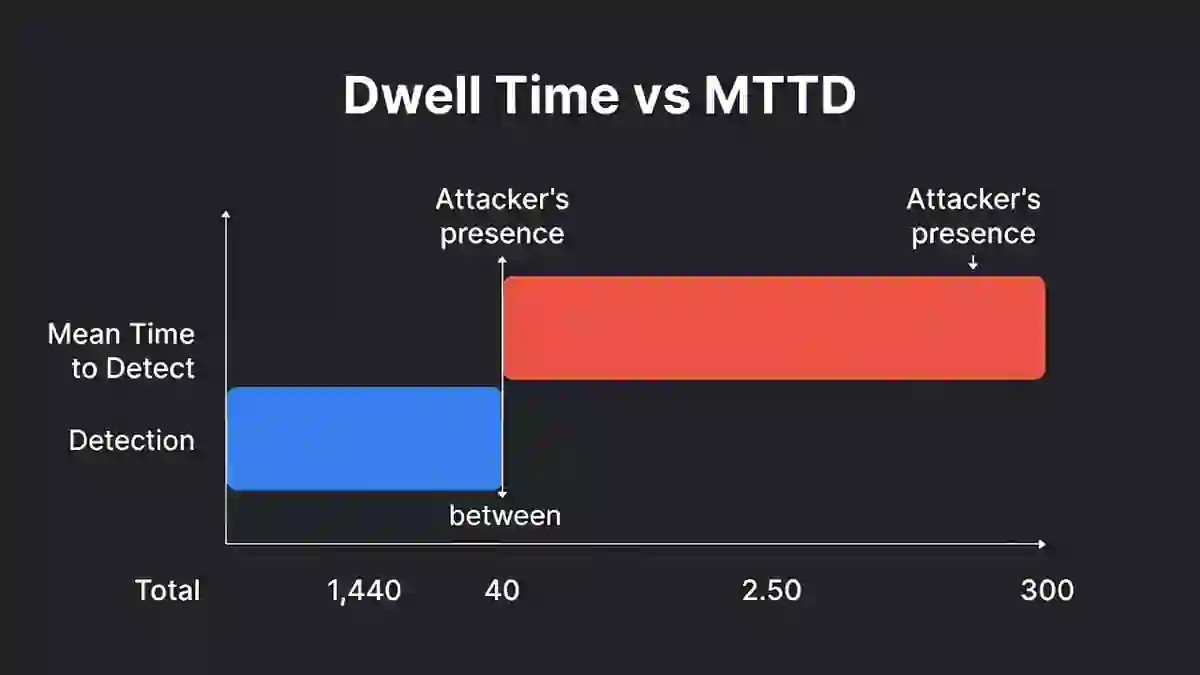
Dwell Time vs MTTD is not a competition — they measure different layers of risk.
Why MTTD Matters in 2026
MTTD directly influences:
- Ransomware containment speed
- Incident response workflow
- Alert triage efficiency
👉 Related: Detection Speed Benchmarks by Industry
Organizations using AI-driven detection tools are reducing MTTD significantly.
Faster detection compresses the attacker’s opportunity window.
Why Dwell Time May Matter More
Dwell time captures the true duration of exposure.
An organization might detect threats quickly (low MTTD), but if:
- Investigation is slow
- Internal communication lags
- Containment decisions are delayed
Dwell time can still remain high.
Long dwell time increases:
- Data theft risk
- Regulatory exposure
- Financial damage
👉 Related: Average Ransomware Containment Time
Regulatory Impact
Under frameworks such as:
- CIRCIA 72-hour reporting
- SEC cybersecurity disclosure rule
- UK 72-hour breach notification
Detection timing influences reporting windows.
If dwell time is long, organizations may discover incidents after data exposure has already occurred.
Speed reduces regulatory pressure.
Which Metric Should You Prioritize?
Dwell Time vs MTTD is not about choosing one.
High-performing organizations track both.
Best practice in 2026:
✔ Reduce MTTD with AI detection tools
✔ Reduce dwell time with automated containment
✔ Track containment metrics alongside both
A mature security program aligns:
Detection → Containment → Recovery → Reporting
Final Thoughts
Dwell Time vs MTTD reveals two different views of cybersecurity performance.
MTTD measures how fast you detect.
Dwell time measures how long attackers operate inside your environment.
In modern threat landscapes, reducing both metrics is essential.
The faster you detect — and the shorter attackers remain — the stronger your resilience.