Incident Response Deadlines US UK: 7 Critical Compliance Rules
Incident Response Deadlines US UK have become a board-level issue for organizations operating across both jurisdictions.
Cyber incidents are no longer handled solely by IT teams. They now trigger regulated disclosure requirements with strict timelines that directly affect legal risk, investor confidence, and regulatory exposure.
Understanding Incident Response Deadlines US UK is essential for security leaders, compliance officers, and executive teams in 2026.
This guide explains the seven critical compliance rules companies must follow.
Table of Contents
1. Why Incident Response Deadlines US UK Matter
Incident Response Deadlines US UK exist to ensure transparency and accountability when cyber incidents occur.
Failure to meet regulatory deadlines can result in:
- Enforcement action
- Financial penalties
- Shareholder lawsuits
- Reputational damage
In 2026, incident response timing is not just operational — it is legal.
2. SEC 4-Day Reporting Rule (United States)
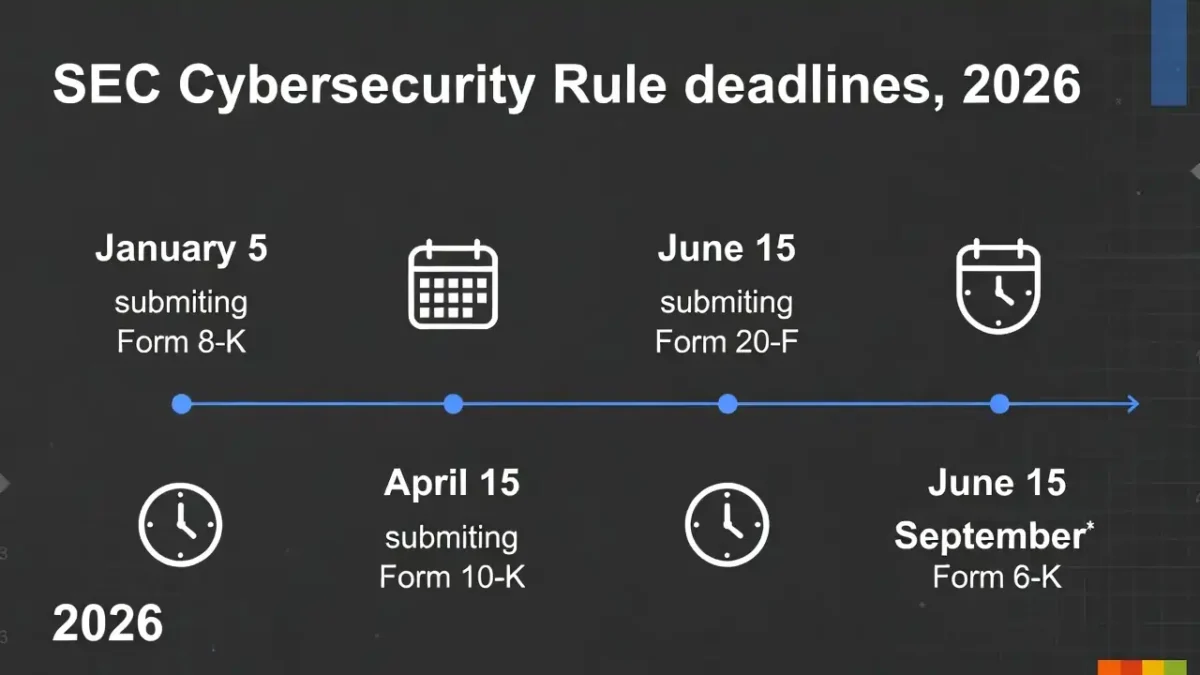
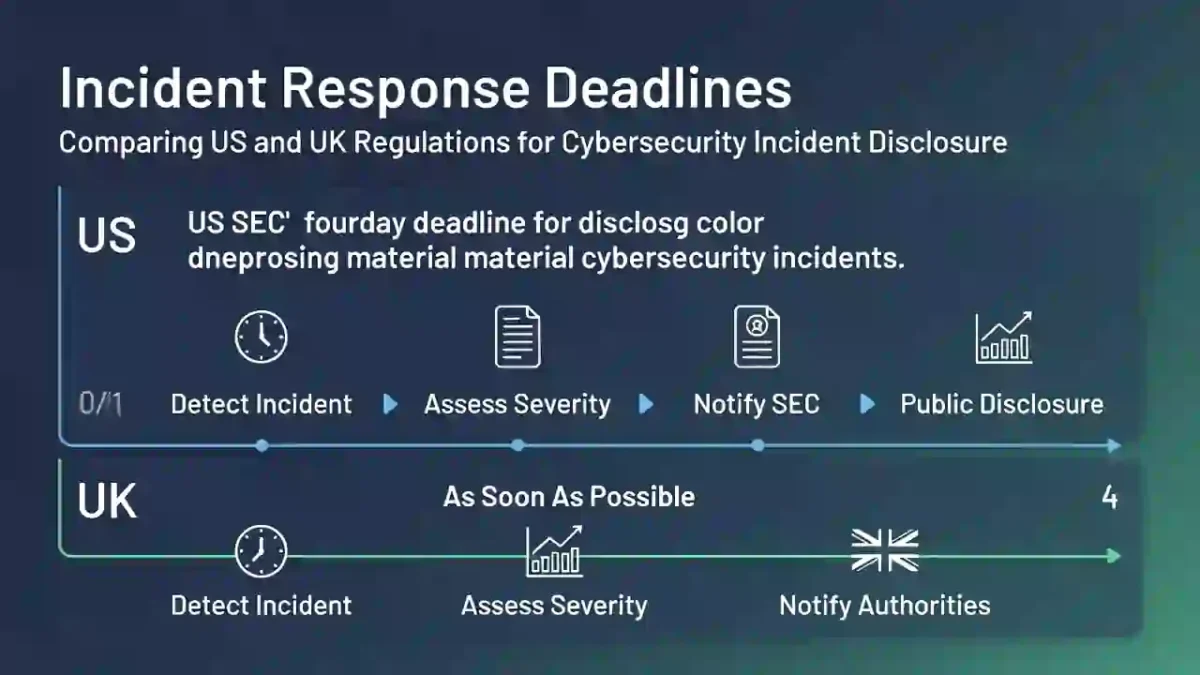
Under SEC cybersecurity disclosure requirements, public companies must file Form 8-K within four business days after determining that a cyber incident is material.
The reporting timeline begins once materiality is determined — not when the breach first occurred.
However, delayed detection increases compliance risk.
👉 Related internal guide: SEC Cyber Rule Timeline 2026
Organizations operating in the US must integrate incident response with legal disclosure workflows.
3. Materiality and Disclosure Triggers
Materiality plays a central role in Incident Response Deadlines US UK on the US side.
An incident is material if a reasonable investor would consider it important when making investment decisions.
Materiality factors include:
- Financial impact
- Operational disruption
- Data exposure
- Legal liability
Organizations must have clear internal criteria for evaluating materiality quickly.
4. UK 72-Hour ICO Reporting Rule
Incident Response Deadlines US UK also include strict UK requirements.
Under UK GDPR, organizations must notify the Information Commissioner’s Office (ICO) within 72 hours of becoming aware of a personal data breach.
Unlike the SEC rule, the UK reporting clock begins when the organization becomes aware of the breach.
The report must include:
- Nature of the breach
- Categories of affected data
- Likely consequences
- Mitigation actions
Failure to comply can result in significant financial penalties.
5. When the Reporting Clock Starts
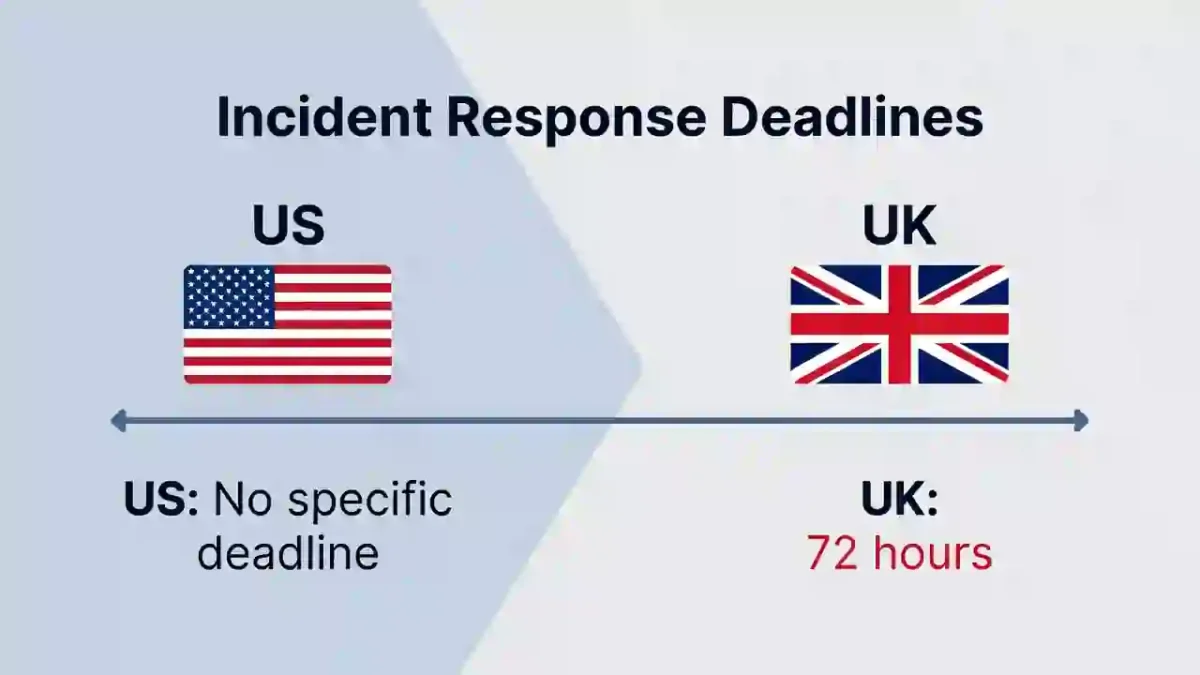
A key difference in Incident Response Deadlines US UK is when the clock begins.
| Jurisdiction | Clock Starts When |
|---|---|
| United States | Materiality is determined |
| United Kingdom | Organization becomes aware of breach |
This difference creates operational complexity for multinational organizations.
Legal, security, and executive teams must coordinate quickly to avoid missing deadlines.
6. How Detection Speed Impacts Compliance
Incident Response Deadlines US UK are directly influenced by time-based cybersecurity metrics:
- Mean Time to Detect (MTTD)
- Mean Time to Respond (MTTR)
- Dwell Time
Long dwell time increases:
- Damage severity
- Regulatory scrutiny
- Likelihood of material classification
👉 MTTD Guide:
Detection speed now affects legal exposure.
Reducing detection delays improves compliance readiness.
7. Executive Compliance Strategy
To comply with Incident Response Deadlines US UK, organizations should:
- Reduce detection gaps
- Establish internal reporting playbooks
- Integrate legal teams into incident response
- Conduct regulatory simulation exercises
- Provide board-level visibility into detection metrics
Incident response is no longer just technical containment.
It is regulatory governance.
Final Thoughts
Incident Response Deadlines US UK reflect a structural shift in cybersecurity accountability.
In the US, public companies must report material incidents within four business days.
In the UK, organizations must notify regulators within 72 hours of breach awareness.
Detection speed determines compliance risk.
In 2026, time is not just a metric — it is a legal obligation.
Organizations that align detection performance with reporting deadlines reduce operational, financial, and regulatory exposure.