Infostealer Malware Explained: 7 Powerful Ways It Leads to Ransomware
Infostealer malware explained in plain English starts with one important point: many ransomware attacks begin long before files are encrypted. The first stage is often quiet. A victim downloads a fake update, opens a malicious attachment, or lands on a poisoned website. An infostealer then collects passwords, browser cookies, session tokens, and other sensitive data from that device. Microsoft’s 2025 reporting says infostealers feed a commercialized cybercrime ecosystem, while Google Cloud’s M-Trends 2025 says stolen credentials from infostealer operations were the second most common initial infection vector in Mandiant investigations, accounting for 16% of cases.
That is why infostealer malware explained matters to readers in the United States, the United Kingdom, and across Europe. Once valid credentials are stolen, attackers no longer need to force their way in. They can log in as a legitimate user, test access across cloud services and remote access tools, move laterally, and prepare for data theft or ransomware. Europol’s 2025 operation against Lumma, which it described as the world’s most significant infostealer threat, highlights how large and organized this market has become.
For readers who want to understand the impact of attacker dwell time after initial compromise, see our guide to cyber breach detection time.
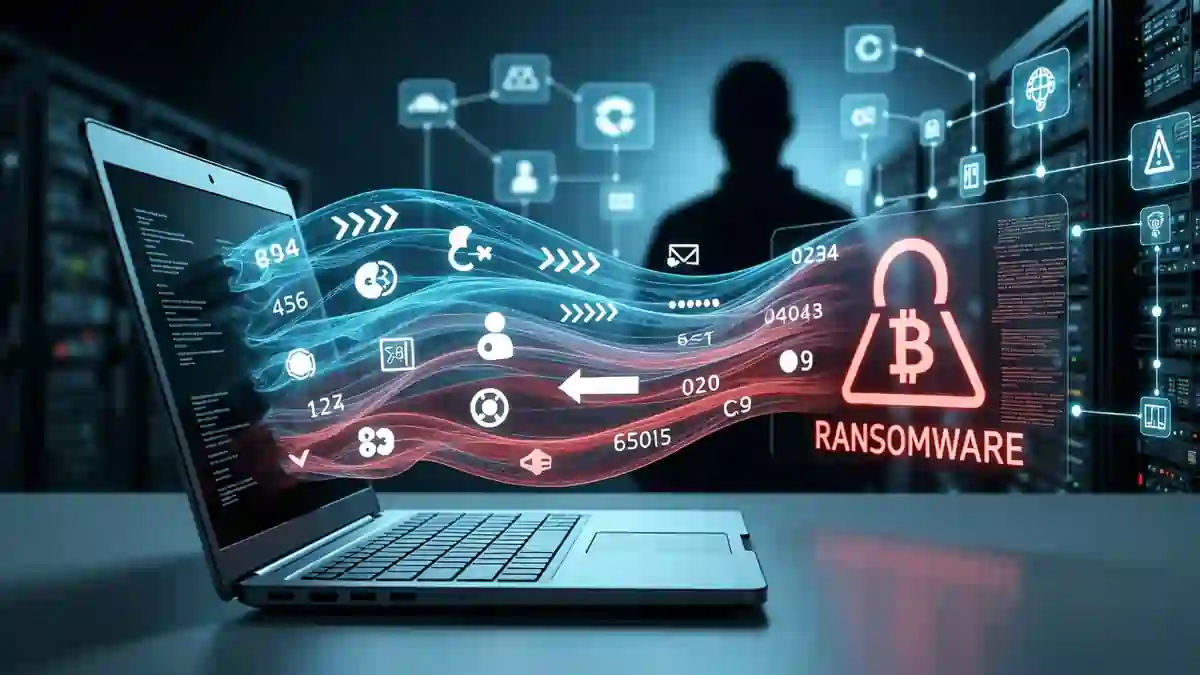
Table of Contents
Infostealer Malware Explained: What It Really Means
At its core, an infostealer is built to extract valuable information from an infected device without drawing attention to itself. Unlike ransomware, which is designed to be noticed at the end of the attack, infostealers are designed to remain invisible long enough to collect everything useful first. Microsoft’s public material on the 2025 threat landscape describes follow-on criminal activity in which compromised credentials and tokens are sold and then used for ransomware, data theft, and extortion.
That makes infostealer malware explained more than a simple malware topic. It is also an identity-security topic. The real damage often comes later, when stolen credentials are reused by access brokers, ransomware affiliates, or fraud operators. One compromised laptop can expose business email, cloud dashboards, VPN access, developer accounts, and shared admin portals. Microsoft’s 2025 Digital Defense Report specifically highlights the commercialization of cybercrime and the role of stolen access in downstream attacks.
How Infostealers Reach Victims
A realistic infostealer malware explained article has to show how infections happen in the real world. Most victims are not compromised through dramatic movie-style hacking. They are tricked. Common delivery methods include phishing emails, fake browser updates, cracked software, malicious ads, trojanized installers, and cloned login or download pages. Microsoft’s 2025 reporting also highlighted the spread of “ClickFix,” a social-engineering technique that tricks users into running commands themselves.
This is one reason infostealers remain effective against both consumers and businesses. A file can look harmless. A fake tool can look useful. A browser prompt can look routine. By the time the victim notices anything unusual, the credentials may already be gone. The UK’s National Cyber Security Centre says its malware and ransomware guidance is designed to reduce the likelihood of infection, the spread of malware across an organization, and the impact when an infection occurs.
For a related look at why attackers stay hidden after initial access, read why cyber attacks go undetected.
What Infostealers Steal
The next part of infostealer malware explained is understanding what attackers actually want. Passwords matter, but modern infostealers target much more than usernames and passwords alone. They also go after browser-stored credentials, active session cookies, autofill data, email logins, cryptocurrency wallet data, VPN profiles, local documents, and system information that helps criminals understand what kind of machine they have compromised. Microsoft’s research and Europol’s Lumma write-up both describe large-scale theft of precisely this kind of user and system data.
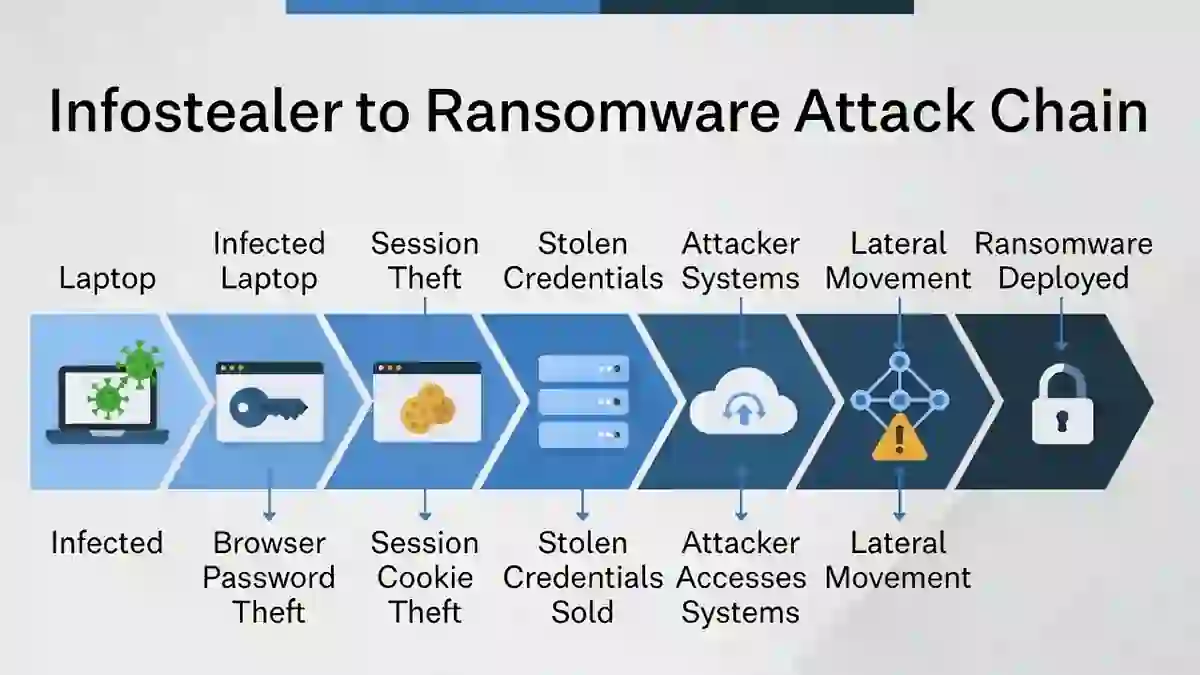
Cookies and tokens are especially dangerous because they can sometimes help attackers act as an already authenticated user. That means the threat is not just “someone learned my password.” The threat can be “someone inherited my session.” That is a major reason infostealer malware explained deserves pillar-content treatment: the malware steals trust, not just credentials.
5 Ways Stolen Credentials Lead to Ransomware
1. Attackers gain initial access without noisy break-in attempts
A stolen password or valid session token lets attackers skip the most obvious part of an intrusion. Instead of repeatedly guessing passwords or probing public services, they can try real credentials against email, VPN, remote desktop, SaaS platforms, and cloud consoles. Google Cloud’s M-Trends 2025 says stolen credentials are now one of the most common entry points Mandiant sees in incident response work.
2. Access brokers turn one infection into a larger breach
A single infostealer infection does not always lead directly to ransomware by the same actor. Often, the stolen data is packaged into logs and sold. Microsoft’s 2025 reporting describes a cybercrime marketplace in which different criminal groups specialize in stealing access, reselling it, and then monetizing it through ransomware or extortion. That division of labor makes attacks faster and more scalable.
3. Stolen sessions can help attackers move deeper into the environment
Once attackers get access to a real account, they can test what else that account can reach. Shared mailboxes, cloud storage, admin portals, and remote support tools all become potential stepping stones. If the compromised user has elevated permissions or reused passwords, the risk grows quickly. This is where ransomware operators often begin internal discovery, privilege escalation, and lateral movement.
4. Data theft often happens before encryption
Modern ransomware attacks are not just about locking files. Attackers frequently steal data first and then use the threat of publication to increase pressure on the victim. Microsoft’s 2025 reporting links stolen credentials to follow-on activity that includes ransomware, data exfiltration, and extortion, which is exactly why an infostealer infection should be treated as a major incident, not a minor malware event.
5. The whole attack chain moves faster than many companies expect
When valid access is already in criminal hands, defenders lose time. Security teams may not detect the intrusion until the attacker is already exploring the environment or preparing payloads. That is why faster detection matters so much once credentials are stolen. If you want a deeper operational view, see our guides to the cybersecurity incident response timeline and how to reduce cybersecurity detection time.
Why This Threat Keeps Growing
A strong infostealer malware explained piece also needs to address scale. Europol said Microsoft identified more than 394,000 Windows computers globally infected by Lumma between March 16 and May 16, 2025. That kind of volume explains why infostealers continue to feed account takeover, fraud, data theft, and ransomware across multiple regions and industries.
The bigger story is specialization. One group builds malware. Another spreads it through fake ads or phishing kits. Another sells access. Another deploys ransomware. Microsoft’s 2025 report says cybercrime has become increasingly commercialized, and that reality helps explain why infostealer malware explained is now one of the most important topics in the ransomware conversation.
How Organizations Can Reduce the Risk
The best defense starts before ransomware ever appears. The UK NCSC malware and ransomware guidance, CISA’s cybersecurity advisories, and Microsoft’s 2025 reporting all point in the same direction: reduce opportunities for malware delivery, strengthen identity controls, and respond fast when suspicious credential activity appears. Phishing-resistant MFA, restricted software installation, browser hygiene, endpoint monitoring, and fast credential resets all make it harder for infostealers to turn one infection into broader compromise.
Organizations should also treat infostealer infections as identity incidents, not only device infections. If one endpoint is compromised, passwords, tokens, and sessions may all need review or revocation. This becomes even more important in regulated environments where delayed detection can create legal and reporting pressure. For a compliance angle, link internally to your article on the CIRCIA 72-Hour Reporting Rule.
Final Thoughts
The clearest summary of infostealer malware explained is simple: ransomware often starts with stolen access, not with encryption. By the time a ransom note appears, the real breach may already be days or weeks old. Attackers increasingly rely on infostealers because they give them something more useful than malware alone: trusted access into real accounts and real environments. Microsoft, Google Cloud/Mandiant, Europol, and the NCSC all point to the same pattern—stolen credentials are now a key bridge between initial compromise and high-impact attacks.