Secure by Design Checklist Vendors: 29 Essential Steps
A secure by design checklist vendors framework gives software companies a structured way to reduce avoidable weaknesses before products reach customers. Rather than treating security as a final-stage review, this approach brings security into planning, architecture, development, testing, release, and long-term support. For software vendors, a secure by design checklist vendors model can improve secure defaults, reduce operational risk, strengthen software supply chain security, and support customer trust.
Security expectations have changed across enterprise software, SaaS platforms, and digital products. Buyers, procurement teams, and technical reviewers increasingly expect evidence that software is designed with security in mind from the beginning. The broader concept is also described in Wikipedia’s article on secure by design, which explains that secure by design treats security as something built into architecture from the outset rather than added later through patches or external controls.
A secure by design checklist vendors approach also helps engineering, product, and security teams work from one shared baseline. Instead of relying on scattered practices, teams can use one consistent model to review trust boundaries, identity controls, dependency risk, release integrity, customer-facing configuration, and long-term support obligations.
Table of Contents
What Secure by Design Means
Secure by design is a software development approach in which security decisions are made during planning, architecture, integration, release, and support rather than being postponed until testing or remediation. A related principle is secure by default, which means the product should begin from the safest practical baseline without forcing customers to manually enable important protections.
In practice, a secure by design checklist vendors model covers trust boundaries, identity controls, authorization, secrets handling, secure updates, logging, dependency governance, vulnerability disclosure, and customer-facing support commitments. It is not limited to code review. It is a broader product discipline focused on reducing predictable weaknesses before release. This lines up with the core ideas commonly associated with secure by design, including least privilege, reduced attack surface, defense in depth, and continuous assurance.
This approach is closely connected to other defensive practices. Vendors responsible for internet-facing systems often also review a public-facing application security checklist to evaluate exposed services, session security, patching, and common web application risks. Identity governance also plays an important role, especially in products that depend on centralized authentication or privileged administration. In that context, an Okta security checklist can help strengthen access control, session protection, and administrative security.
A practical secure by design checklist vendors process is therefore not just a technical checklist. It is a way to connect product design, engineering discipline, and customer assurance into one repeatable operating model.
Why a Secure by Design Checklist Vendors Approach Matters
A secure by design checklist vendors process turns broad security principles into repeatable engineering actions. It gives product, engineering, and security teams a practical way to evaluate architecture, trust boundaries, authentication, authorization, update integrity, logging, disclosure processes, and dependency governance before customers deploy the product.
This matters for both technical and business reasons. From a technical perspective, it helps reduce weak defaults, exposed management interfaces, unsigned updates, poor access control, and untracked third-party dependencies. From a commercial perspective, it helps vendors show that product security is part of how they operate rather than simply part of how they describe themselves.
A secure by design checklist vendors model is also useful because it gives teams a more consistent basis for release review, risk reduction, and long-term support planning. For many organizations, this kind of checklist is now treated as part of standard product governance rather than an optional security exercise.
A secure-by-design approach is also relevant because product weaknesses can contribute to broader attack paths. Exposed services, weak remote administration, and insecure update mechanisms can increase the likelihood of early compromise. These patterns fit naturally with your internal post on ransomware initial access in 2026, especially when discussing exposed systems, stolen credentials, and insecure access points.
Secure by Design Checklist Vendors: 29 Essential Steps
1. Assign executive ownership for product security
A secure-by-design program is more effective when product security has clear executive ownership tied to release priorities, funding, and accountability.
2. Define product security principles
Each product should have written security principles covering identity, resilience, logging, data protection, dependency governance, secure updates, and incident response.
3. Perform threat modeling before major design decisions
Threat modeling is most useful before architecture is fixed. It is easier to correct trust assumptions and control gaps during design than after release.
4. Map trust boundaries clearly
Software teams should document where data, privileges, and commands move between users, services, APIs, third parties, and administrative functions.
5. Ship with secure defaults
Core protections should be enabled by default. Customers should not have to search through settings to reach a reasonably safe starting point.
6. Eliminate default passwords and weak bootstrap access
Products should not rely on shared credentials, predictable setup tokens, or weak administrative onboarding paths.
7. Protect privileged access with strong authentication
Administrative functions should use strong authentication, careful session handling, and limited exposure. This area often overlaps with identity hardening guidance such as an Okta security checklist when vendors need stronger controls around privileged accounts and centralized access.
8. Apply least privilege
Users, services, workloads, and APIs should receive only the permissions required for their intended tasks.
9. Separate authentication from authorization
Successful login should not imply unrestricted access. Sensitive actions should always be checked against role, policy, and ownership.
10. Protect secrets throughout the lifecycle
Credentials, tokens, certificates, and private keys should not be hardcoded into repositories, scripts, images, or build artifacts.
11. Prefer safer implementation approaches where feasible
Software teams should reduce recurring classes of vulnerability by using safer libraries, secure coding practices, and stronger review standards.
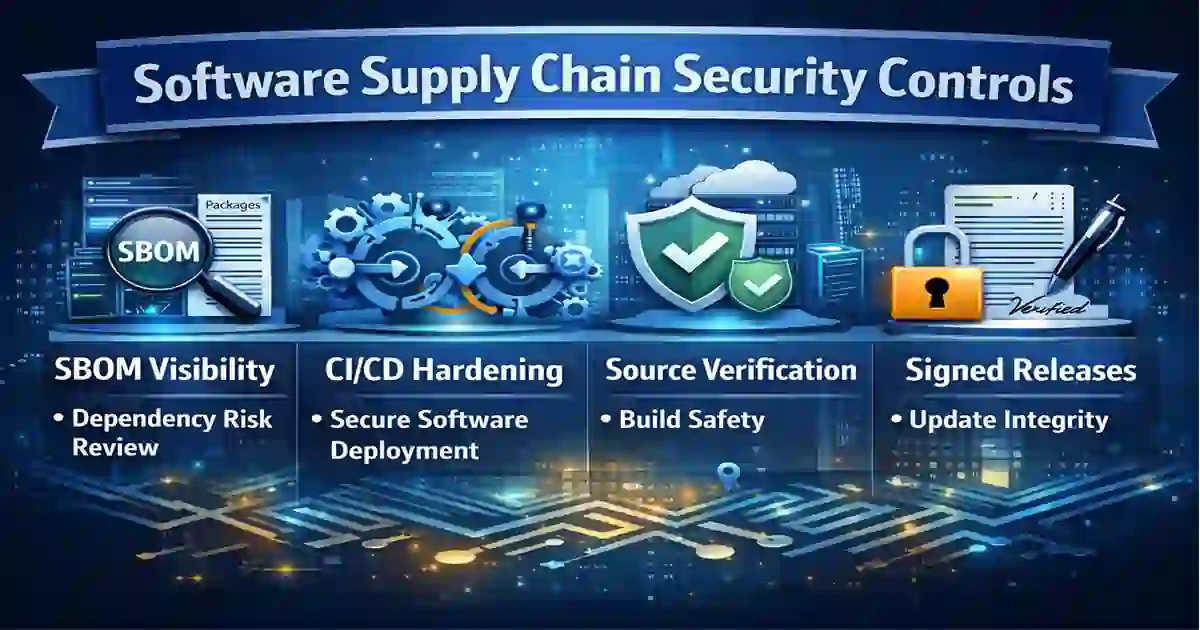
12. Secure the software supply chain
Package selection, dependency hygiene, source verification, and build integrity are all part of secure software delivery.
13. Maintain an SBOM
A software bill of materials improves visibility into third-party and open-source components so vendors can respond more effectively when vulnerabilities affect specific packages or versions.
14. Review dependencies continuously
Dependency review should cover abandoned packages, malicious updates, typosquatting, transitive exposure, and license risk.
15. Harden CI/CD pipelines
Repositories, build systems, runners, and deployment workflows should be protected with strict access controls, secret protection, and auditability.
16. Sign releases and verify update integrity
Customers should be able to verify that updates are authentic and untampered before installation.
17. Separate development, testing, and production environments
Environment separation reduces the chance that lower-trust systems or testing shortcuts expose production assets.
18. Minimize exposed services and interfaces
Unnecessary ports, protocols, APIs, and features should be disabled to reduce attack surface. For products that include web applications, portals, or exposed administrative panels, vendors often combine this work with a public-facing application security checklist to review external exposure and hardening decisions more systematically.
19. Encrypt sensitive data in transit and at rest
Data protection should use modern transport security, appropriate storage defaults, and strong key handling.
20. Log security-relevant events by default
Logging should capture authentication attempts, privilege changes, policy changes, administrative actions, and update events.
21. Make logs usable for customers
Logs should be detailed, exportable, and documented well enough to support monitoring, investigations, and incident response.
22. Provide a public vulnerability disclosure path
Vendors should publish a reporting channel, triage process, remediation workflow, and a clear communication path for customers and researchers.
23. Publish patch and support commitments
Customers should know patch timelines, supported versions, maintenance expectations, and end-of-life dates.
24. Test abuse cases as well as normal workflows
Security testing should cover misuse, privilege escalation, broken access control, malicious input handling, and administrative abuse scenarios.
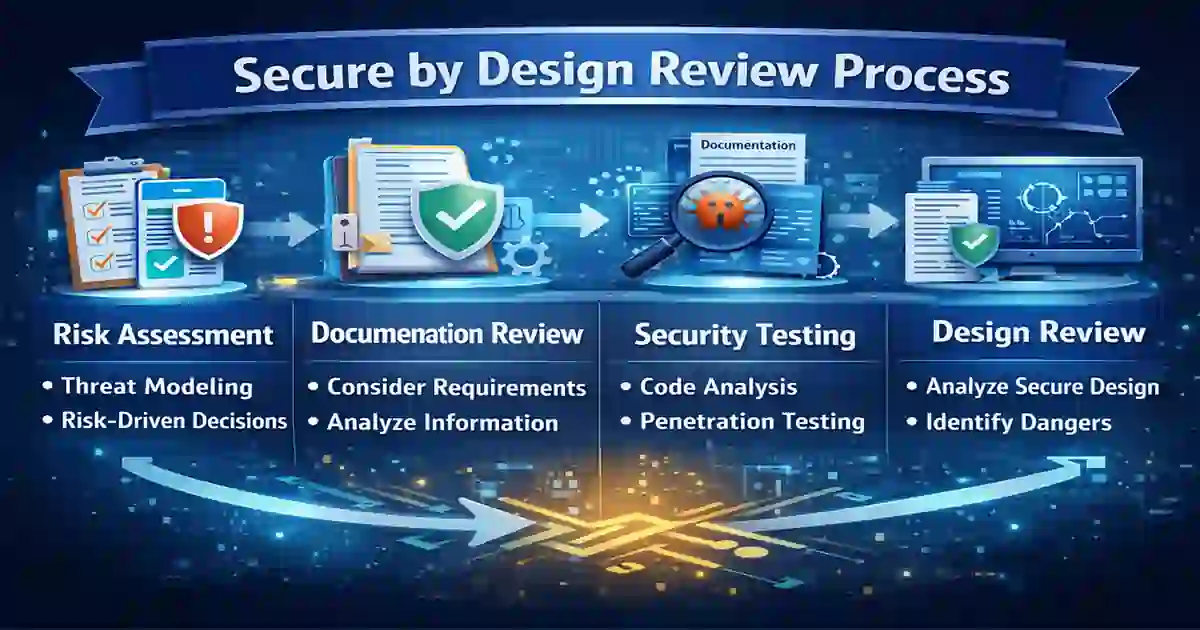
25. Review architecture in addition to code
A design flaw can remain even when code quality is otherwise high. Architecture review is a separate discipline from code review.
26. Reduce unnecessary complexity
Excessive configuration paths, undocumented dependencies, and sprawling administrative options often create avoidable security failures.
27. Document secure configuration clearly
Customers should be able to understand hardening options, deployment expectations, logging guidance, and recovery procedures without relying on informal support.
28. Measure security outcomes
Useful metrics include reduction in critical vulnerabilities, elimination of unsafe defaults, remediation time, supported-version coverage, and evidence of secure distribution.
29. Support security claims with evidence
Security claims should be supported by documentation, testing practices, disclosure processes, patch commitments, and demonstrable engineering controls.
Common Implementation Gaps
Many organizations use the language of secure by design without making consistent product changes. Common gaps include weak defaults, missing design-stage review, poor dependency visibility, incomplete logging, vague vulnerability handling, and unclear support commitments.
These weaknesses can directly increase exposure to real attack paths. Exposed services, weak administration, and insecure update paths can all contribute to early compromise. That is one reason product security discussions often connect secure-by-design principles with broader issues such as ransomware initial access in 2026, where attackers often exploit exposed remote services, weak identity controls, or other preventable entry points.
Another common problem is treating software composition and vulnerability disclosure as paperwork exercises rather than operational controls. In practice, a secure by design checklist vendors approach is most useful when it changes architecture decisions, release workflows, and customer-facing support commitments.
A secure by design checklist vendors framework is therefore most effective when it is used continuously, not only at launch time. Vendors that review it during design, release planning, and support cycles are more likely to reduce long-term product risk.
Conclusion
A secure by design checklist vendors framework is a practical way to translate broad security expectations into product decisions. It helps software vendors build safer products, reduce avoidable exposure, improve customer trust, and align with modern security expectations.
For vendors, this checklist can serve as an internal review tool, a governance reference, and a supporting document during procurement or assurance reviews. For customers, it provides a more structured way to compare vendor claims with the controls and development practices that actually reduce software risk.